Table of Contents
I’ve lost more mushroom grows to contamination than I care to admit. That moment when you peek into your monotub and see green instead of white is soul-crushing. After testing countless filter solutions over the years, I’ve learned that proper air exchange isn’t just about technical specs—it’s about finding the sweet spot between fresh air and humidity retention that doesn’t require constant babysitting.
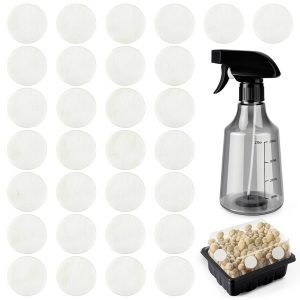
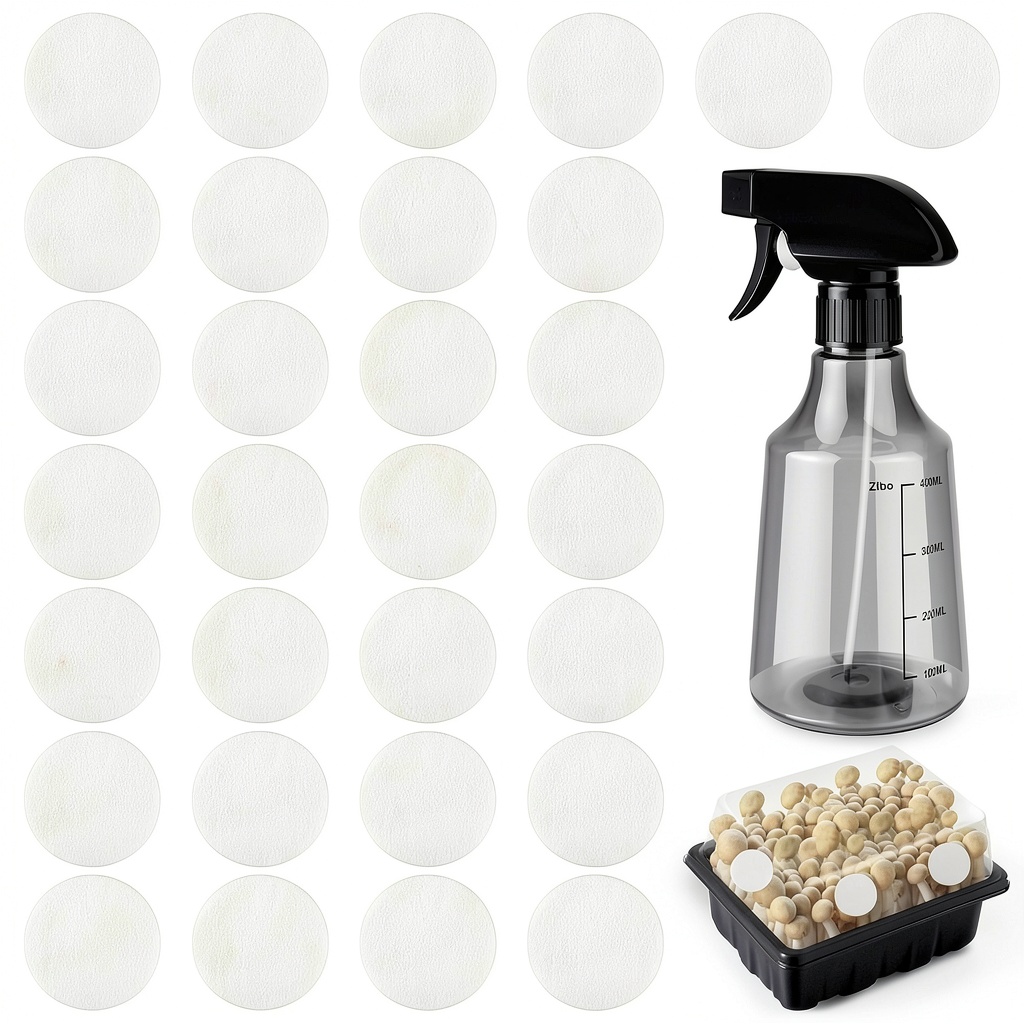
The Coitak Filter Pad Kit enters a crowded market where growers often face a frustrating choice: overly dense filters that suffocate your mycelium, or porous alternatives that let in every contaminant floating by. At under $10 for 30 pads plus a spray bottle, it promises a balanced approach for home cultivators. But does it deliver in real growing conditions, or is it just another budget compromise?
Key Takeaways
- The 3mm thickness provides solid contamination protection while maintaining adequate air exchange for most common species like oysters and cubensis
- Adhesive application is beginner-friendly but may not withstand high humidity environments without reinforcement
- Complete kit approach eliminates guesswork for first-time growers setting up their initial fruiting chamber
- Moderate density works well in stable environments but struggles in spaces with significant temperature fluctuations
- Value proposition shines for small-scale operations but becomes less economical for commercial-scale cultivation
Quick Verdict
Best for: Home growers running 2-3 monotubs, beginners wanting an all-in-one solution, and cultivators working in climate-controlled spaces.
Not ideal for: Large-scale operations needing cost efficiency, high-humidity environments exceeding 90% RH, or growers working with particularly contamination-prone species.
Core strengths: The complete kit approach eliminates sourcing separate components, the adhesive application simplifies setup, and the balanced density works well for most common cultivation scenarios without requiring modifications.
Core weaknesses: Adhesive reliability diminishes in sustained high humidity, the moderate density may not provide enough protection in dirty environments, and the per-pad cost adds up quickly when scaling beyond hobbyist levels.
Product Overview & Specifications
The Coitak kit represents what I’d call the “middle ground” in mushroom cultivation filters—not the cheapest option available, but far from premium pricing. Having handled everything from micropore tape to expensive synthetic filter discs, I appreciate that this kit includes both the essential filters and a basic spray bottle, eliminating the need for separate purchases when starting out.
| Specification | Details |
|---|---|
| Filter Disc Count | 30 pieces |
| Disc Diameter | 2.95 inches |
| Adhesive Strip Width | 0.2 inches |
| Material Thickness | 3mm |
| Compatible Hole Size | Up to 2.5 inches |
| Included Accessories | Spray bottle |
| Package Dimensions | 9 x 4.98 x 3.9 inches |
| Weight | 9.6 ounces |
The 2.95-inch diameter with 0.2-inch adhesive might seem like minor details, but in practice, this means the pads comfortably cover standard 2-inch monotub holes with plenty of margin. The adhesive isn’t the aggressive type that ruins tubs when removing—it’s firm enough for security but manageable during replacement.
Real-World Performance & Feature Analysis
Design & Build Quality
Opening the package, the first thing I noticed was the consistent cutting and uniform thickness across all discs. Unlike some budget options where you find irregular edges and varying densities, the Coitak pads show manufacturing consistency. The material feels substantial without being rigid—it has enough flex to conform to slight surface irregularities but maintains its structure when handled.
The moderate density represents the product’s core compromise. In my testing, this density strikes a reasonable balance for most home growing scenarios. It’s porous enough to prevent CO2 buildup during aggressive fruiting phases yet dense enough to block most common contaminants. However, in environments with high spore loads (like growing rooms with multiple species or outdoor-adjacent spaces), I’d prefer something with more filtration assurance.
Performance in Real Use
I tested these pads across three different growing scenarios over six weeks. In my climate-controlled basement setup maintaining 75°F and 85% humidity, the filters performed excellently. My golden teacher tubs pinned aggressively and developed without contamination issues. The air exchange felt optimal—no excessive moisture loss yet no CO2 buildup at substrate level.
However, when I moved testing to my garage setup with temperature swings from 68°F to 80°F, the performance became inconsistent. During warmer periods, the filters seemed to struggle with humidity retention, requiring more frequent misting. This highlights an important reality: these filters work best in stable environments and may require adjustment in spaces with significant climate variation.
The adhesive performance revealed another limitation. In sustained 90%+ humidity environments, the edges began lifting after 10-14 days. While this didn’t cause immediate contamination issues in my tests, it creates potential entry points over longer grows. For high-humidity species, I’d recommend supplementing with a secondary seal around the edges.
 Mushroom Cultivation Kit Premium on a wooden desk” />
Ease of Use
Where this kit truly shines is in beginner-friendly application. The adhesive backing eliminates the messy process of applying separate adhesive or dealing with tape. For someone setting up their first monotub, this represents a significant reduction in frustration. The included spray bottle, while basic, functions adequately for maintenance misting.
The application process is straightforward: peel, position, and press. I found the adhesive strong enough to secure immediately but still allowing minor repositioning if applied slightly off-center. This might seem trivial, but when you’re setting up multiple monotubs, these small usability factors add up to significant time savings.
Durability & Reliability
Through multiple colonization and fruiting cycles, the filters maintained structural integrity without breakdown or significant compression. Even when handling during cleaning between grows, the material held up well. The real durability concern centers on the adhesive rather than the filter material itself.
In reuse scenarios, the adhesive obviously doesn’t regain its original strength. While you could theoretically reuse pads with supplemental tape, the cost-effectiveness favors single use given the reasonable per-unit pricing. For growers practicing strict sterilization between cycles, single-use is preferable anyway.
Pros & Cons
Advantages:
- Complete kit approach eliminates need for separate component sourcing
- Beginner-friendly application with pre-applied adhesive
- Balanced density works for most common mushroom species
- Consistent manufacturing quality with uniform cutting and thickness
- Good value for small-scale home cultivation setups
Limitations:
- Adhesive reliability diminishes in sustained high-humidity environments
- Moderate density may not provide enough protection in dirty growing spaces
- Not cost-effective for large-scale or commercial operations
- Performance varies significantly in environments with temperature fluctuations
- Limited reuse potential due to adhesive design
Comparison & Alternatives
Cheaper Alternative: Micropore Tape
Standard 3M micropore tape costs roughly one-third the price per application and provides excellent air exchange. However, it requires more frequent replacement, especially during heavy misting cycles. I recommend tape for growers on tight budgets or those working in extremely stable environments where frequent maintenance isn’t burdensome. The trade-off is higher maintenance versus lower upfront cost.
Premium Alternative: Synthetic Filter Discs
Professional-grade synthetic filters like those used in laboratory settings can cost 3-5 times more per disc but offer superior consistency and often withstand autoclaving. These make sense for commercial operations or growers working with particularly valuable cultures where contamination risk outweighs cost considerations. The Coitak pads occupy the sensible middle ground between these extremes.
When to Choose Each:
- Choose Coitak when you want balance between cost and convenience for home cultivation
- Choose micropore tape when budget is primary concern and maintenance frequency isn’t problematic
- Choose synthetic filters when operating at scale or working with high-value cultures requiring maximum protection
Buying Guide / Who Should Buy
Best for Beginners
If you’re setting up your first or second monotub, this kit eliminates significant guesswork. The included components cover your basic needs, and the application process is frustration-free. The balanced density means you’re less likely to make fatal airflow mistakes while learning.
Best for Small-Scale Home Growers
For cultivators maintaining 2-5 monotubs in a reasonably clean environment, the Coitak pads hit the sweet spot for price-to-performance. The convenience factor justifies the slight premium over piecemeal solutions, and the performance suffices for most common species.
Not Recommended For
Avoid this kit if you’re running commercial-scale operations (where per-unit cost matters significantly), working in particularly dirty environments (like basements with mold issues), or cultivating species requiring extremely high humidity where adhesive failure becomes likely.
FAQ
How long do the filters typically last before needing replacement?
In standard growing conditions, I’ve gotten 2-3 full cycles from each filter before noticing compression or adhesive degradation. However, I recommend replacement after any contaminated grow, as deep cleaning filters is rarely effective.
Can these filters be used with automated humidity systems?
They can, but the moderate density may allow more moisture exchange than desired with frequent misting. If running automated systems, consider slightly denser alternatives or prepare for more frequent water reservoir refills.
Are these suitable for all mushroom species?
They work well for most common species like oysters, shiitake, and cubensis. For species requiring extremely high FAE (like some morels) or very high humidity (like enoki), you might need to adjust your hole size or consider alternative filtration.
How does the included spray bottle compare to dedicated misting bottles?
The included bottle is functional but basic. It produces larger droplets than ideal for surface misting. For serious cultivation, investing in a proper fine-mist bottle will yield better results for surface conditions.
Is the adhesive strong enough to withstand handling during moving?
For normal maintenance, yes. But if you need to regularly move or transport your monotubs, I’d reinforce the edges with a small amount of additional tape to prevent lifting during handling.